Cold Morning Head Start: Giving Your Garage a Winter Handover
Photo: Basher Eyre, CC BY-SA 2.0, via Wikimedia Commons
November has a way of turning a garage from a handy storage cupboard into the most useful room in the house. The mornings are darker, the windscreen is filmy, and the car that started sweetly in September suddenly sounds like it is thinking about it. This is the moment for a handover: not a full service, not a panic, just a calm hour or two spent moving the garage and the car from autumn mode into winter mode. The aim is simple — fewer cold-morning surprises, and a workspace that helps rather than hinders when something does go wrong.
Begin with the battery, while it is still behaving
Cold weather is hard on batteries. It slows the chemical reaction inside them and asks more of them at exactly the moment they have less to give. Before the first proper frost, check the battery terminals for crusty white deposits and give them a clean if needed. A cheap multimeter is useful here: a rested, healthy battery should show around 12.6 volts. Anything closer to 12.2 or below is asking for a charger, not a miracle.
If your battery is more than four or five years old and has already been sluggish on damp mornings, get it load-tested at a garage rather than waiting for it to fail in a car park. A smart charger or maintainer is a sensible investment for anyone doing short trips, especially if the car sits for days at a time. Charge it overnight, not in a rush before work. And check the key fob battery too — it is a small thing that feels enormous when it dies in the dark.
Tyres: the placard is your friend
Check tyre pressures when the tyres are cold, ideally before the car has been driven. Use the pressures on the door pillar or fuel flap, not the number on the sidewall. A sharp cold snap can knock a few psi out of a tyre, and under-inflation hurts grip, fuel economy and tyre life. While you are down there, look at the tread. The legal minimum in the UK is 1.6mm, but for winter driving many drivers prefer to replace tyres nearer 3mm. Look for cracks, bulges and embedded screws as well as tread depth.
Do not forget the spare or the inflation kit. A space saver that has been sitting for years may be soft, and a sealant kit may be past its date. Check the valve caps too; they keep grit and moisture out of the valve. None of this takes long, but it is much easier in daylight than at the side of a road in the rain.
Rubber seals, drains and the frozen-door problem
Door and boot seals can freeze to the bodywork, especially after a damp night followed by a cold snap. Clean them with mild soapy water, dry them properly, and apply a silicone spray or rubber care product. Do not use cooking oil or a random lubricant you found at the back of the shed. A thin smear on the seals can stop them sticking without turning the rubber into a greasy mess.
Clear the scuttle drains and the channels around the boot lid so water can escape. Check that the washer fluid is winter strength; summer mix is no match for a frosty morning. If your garage is damp, leave a little ventilation rather than sealing it up completely. A dry-ish garage is better than a sealed one that grows mould on the spare coat and rust on the tool handles.
Refresh the emergency kit before you need it
An emergency kit is only useful if it is in the car and still works. Dig out the high-vis vest, torch, blanket, warm layer, gloves, scraper, de-icer, jump pack, phone cable and first aid kit. Check expiry dates and batteries. If you carry a space saver, make sure the jack and wheel brace are present and that you know how to use them. A small tarp and a pair of old gloves can make a roadside job less miserable.
Keep the kit in a bag or box that stays put. Loose torches roll under seats, and loose de-icer always seems to leak. A little organisation now means you are not rummaging in the boot with cold hands and a deadline.
The one-hour workspace reset
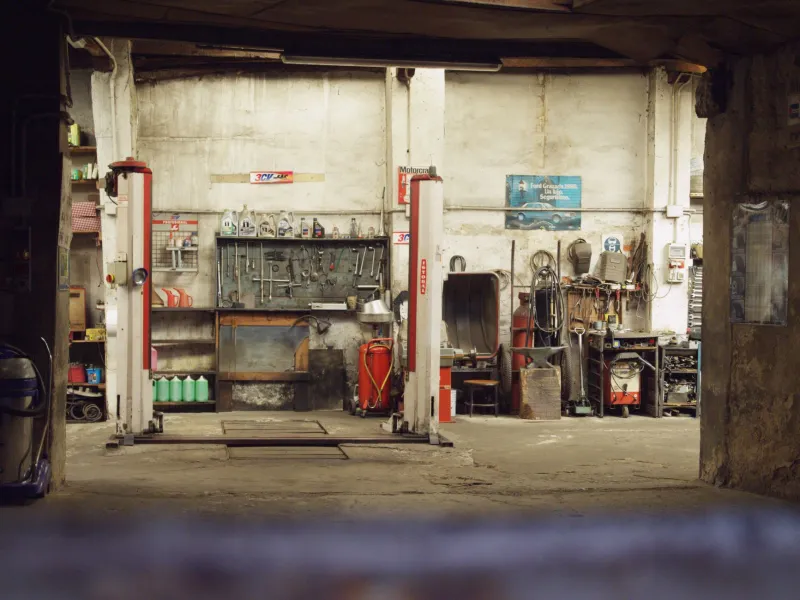
The garage itself deserves a reset. Start by clearing the floor. Sweep up leaves, grit and the mystery bits that accumulate over autumn. Make sure you can walk around the car without climbing over things. Check the lighting; a bright LED work light makes winter jobs much less grim. If you use extension leads, use an RCD-protected one and keep it out of puddles.
Store oils, paints and chemicals away from damp and out of reach of children and pets. Label anything that has lost its identity. Keep a drip tray under any car that leaks, and a bag of absorbent granules near the door for spills. Put tools back on hooks or shelves so you can find them next time. A tidy garage is not about looking showroom-perfect; it is about making the next job easier.
Finish with a ten-minute test run
After the checks, take the car for a short drive. Use the brakes gently, test the lights, listen for anything new and let the engine warm through. If the MOT is due soon, book it now rather than waiting for the pre-Christmas rush. A winter handover is not about perfection. It is about knowing what you have, fixing the obvious weak spots and starting cold mornings with a little less guesswork.