Dry Hinges, Damp Mornings: The Ten-Minute Grease Circuit Around Your Car
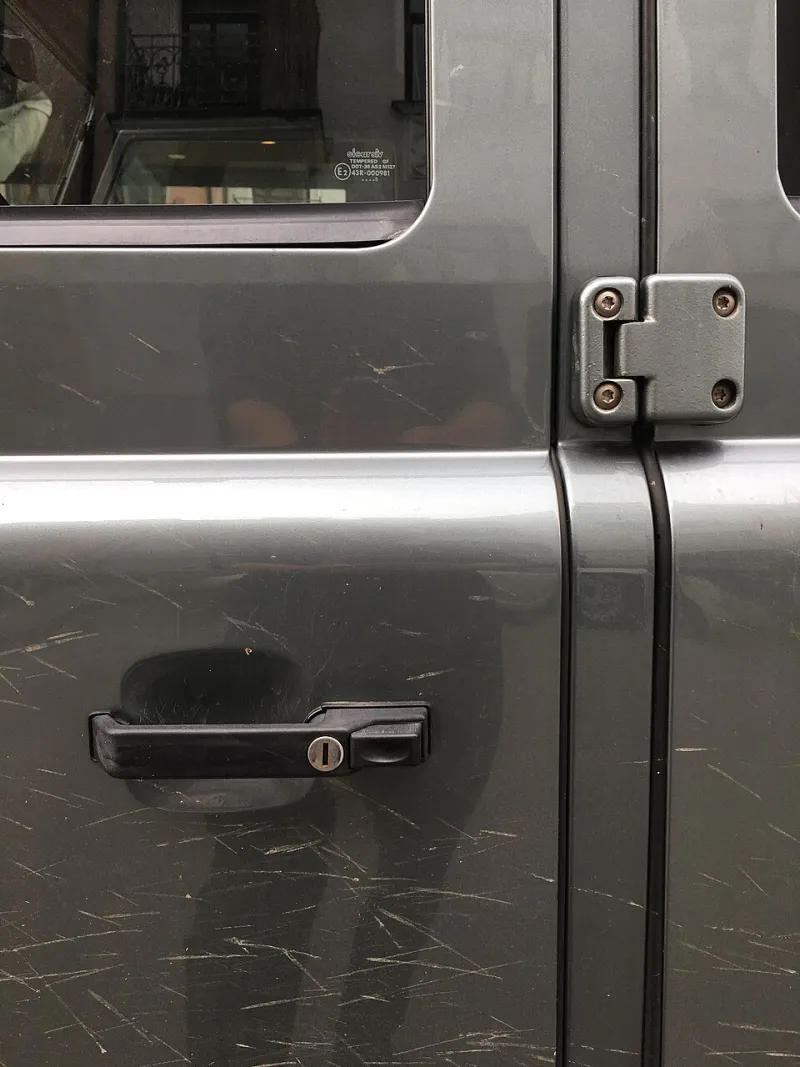
Photo: Pittigrilli, CC0, via Wikimedia Commons
There's a particular sound a car makes in November. You hear it at half seven in the morning, standing on wet tarmac with the key in your hand — a soft creak as the door swings out, a click halfway through its arc, then a dull thunk from the boot that wasn't there in August. Nothing is broken. Something is simply dry.
Hinges, latches, check straps and catches all leave the factory with a film of grease on them, and nobody ever replaces it. Rain washes it out, grit grinds it away, and the salt that gets spread around from late October onwards does the rest. The noises are just the car asking for five minutes of attention. Here's how to give it.
Why autumn is when things start complaining
Metal-to-metal contact points live outdoors. They get soaked on the commute, then sit in a cold garage or on a damp driveway overnight, and condensation does what condensation does. Add a few degrees of temperature swing and the clearances that were designed in start to feel tight. That's why a door that was silent all summer suddenly objects in the cold — it isn't wear, it's friction.
A garage door gets oiled when it squeaks because we can hear it from the kitchen. The car's door gets ignored because we're inside it with the radio on.
What you actually need
Keep it small. This is a pockets-and-driveway job, not an afternoon on the ramps.
- A rag or a few sheets of blue roll
- White lithium grease in an aerosol, ideally with the little straw
- A silicone spray for rubber and plastic contacts
- A dry PTFE spray for lock barrels
- An old paintbrush or cotton buds for awkward corners
- Gloves, because grease under the nails lasts longer than the grease on the hinge
One note before you start: WD-40 is a water displacer and a decent cleaner, not a long-term lubricant. It'll quieten a hinge for a week and then evaporate, taking the last of the old grease with it. Use it to shift muck, then put proper grease on top.
The route: start at the driver's door, work clockwise
Have a system. If you wander around the car spraying whatever catches your eye, you'll do three contact points twice and miss the boot entirely.
1. Front door hinges
Open the door fully and look at the two hinge assemblies between door and A-pillar. Wipe the pins and plates first — you want grease on metal, not on grit. A short burst on the top hinge, work the door back and forth a few times, then the same on the bottom one. Wipe the excess before it drips onto the sill.
2. The check strap
That click halfway open is nearly always the check strap — the flat arm that stops the door flying wide. Grease the pin and the roller at the body end, and a light smear along the arm. It's the single most ignored part of a door and one of the noisiest.
3. Latch and striker
On the door edge you'll find the latch mechanism; on the pillar, the striker bar it grabs. A small dab inside the latch jaws and a thin film on the striker is plenty. Too much and you'll be wiping grease off passengers' coats for a fortnight.
4. Repeat on the rear doors
Same order, same amounts. If the car has a tailgate rather than a boot, treat its hinges, latch and gas struts under the same rules.
5. Boot hinges and catch
Boot hinges are often neglected because they're tucked under the rear shelf. Reach in, wipe, grease, then work the lid. The catch at the base — the one that releases when you press the handle — benefits from a light application, and the lock barrel gets a puff of dry PTFE rather than grease, which attracts dust and gummed-up keys over time.
One thing to leave alone: the shiny rod of a gas strut. It has a seal running along it, and grease on that rod just collects grit and destroys the seal. Wipe it clean and dry instead.
6. Bonnet hinges and catches
Open the bonnet and prop it safely. The hinges at the scuttle end want the same treatment as the door hinges. Then look at the front: there's a main catch and, crucially, a secondary catch that stops the bonnet flying up if the main one lets go. That secondary catch is an MOT-relevant component and it lives in the worst possible environment — road spray, salt, and no shelter. A few drops of oil on the release mechanism and a light grease on the sliding surfaces do more for your safety than most people realise.
While you're there, a squirt of silicone on the rubber bonnet bump stops stops them squeaking against the panel.
7. The fuel flap hinge
Tiny, plastic, and prone to that irritating squeak every time you fill up. Ten seconds with silicone spray, and don't get any on the paint.
Which product goes where
| Contact point | Product | Why |
|---|---|---|
| Door and bonnet hinges | White lithium grease | Stays put, handles load |
| Check strap pin | White lithium grease | High friction, exposed |
| Latch jaws and strikers | White lithium grease, thin | Needs to resist wash-off |
| Rubber bump stops and seals | Silicone spray | Keeps rubber supple |
| Lock barrels | Dry PTFE | No sticky residue |
| Fuel flap hinge | Silicone spray | Plastic-on-plastic |
The overspray problem
This is where a ten-minute job turns into an afternoon. Aerosol grease travels further than you think, and a fine mist of it on a dark wing is invisible until the light catches it — by which point it's been baked on for a week.
- Use the straw, not the bare nozzle, and point it into the hinge gap
- Hold the rag behind the target as a backstop
- Mask around the latch area with a scrap of cloth or a sheet of newspaper
- Keep every product well away from brake discs and pads, even on a rear boot latch job
- Never let silicone near the windscreen or wiper blades — you'll be chasing smears for months, usually through a low winter sun
The other common error is over-greasing. A hinge needs a film, not a blob. Excess grease holds grit, which grinds away the very surfaces you were trying to protect, and it migrates onto paint, trousers and, eventually, the carpet.
Two minutes of housekeeping
Before you close the toolbox, wipe every contact point once more so nothing is sitting proud, then open and shut each door, the boot and the bonnet a couple of times. You'll hear the difference immediately. While you're testing, give each one a gentle lift and wiggle — a hinge that moves more than it should is a worn hinge, not a dry one, and no amount of grease will fix that.
Ten minutes, one rag, two cans, and the car stops narrating every journey. Do it now, before the first proper frost, and your doors will open quietly all winter — which is more than most of us can say for the garage door.