The Gap Under the Door: A Weekend Fix for a Draught-Proof Garage
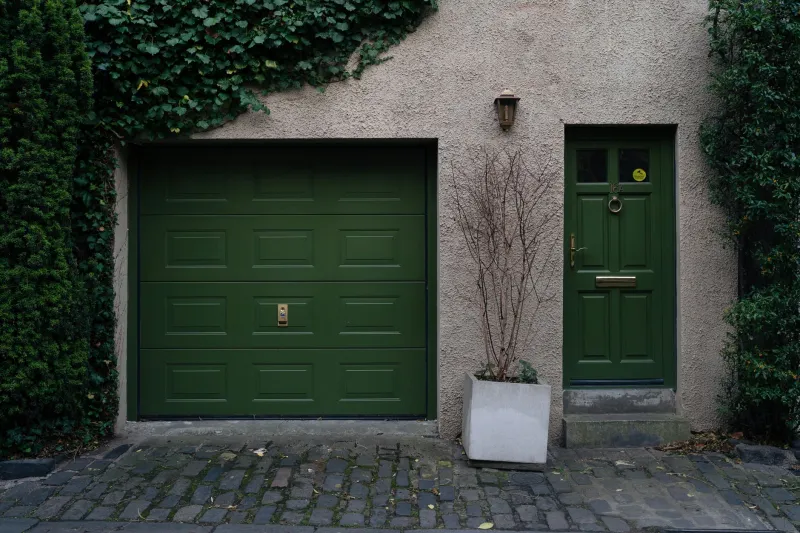
November has a habit of finding the weakest point in a British garage. You sweep out the leaves on Saturday, and by Monday there is a fresh pile against the door. The floor feels colder than the air, there is a dark tide mark near the threshold, and the bottom hinge has started to look a bit rusty. None of this is dramatic. It is just a gap — often no wider than a finger — doing exactly what gaps do.
A 20-millimetre gap under a standard single garage door sounds trivial until you multiply it by the width of the opening. Across 2.4 metres, that is a letterbox of cold, damp air running the full length of the garage. Add a windy day and a bit of driving rain, and the garage stops being a shelter and starts being a catchment area.
First, Look Properly at What You Have Got
Before buying anything, spend twenty minutes on your knees with a torch. Close the door from the inside and look for daylight along the bottom edge. Run your hand along the gap — you will feel draughts in places you cannot see. Check the corners, where the door meets the frame, and the vertical gaps down each side. Those side gaps are easy to ignore because they are narrow, but they let in a surprising amount of fine rain and cold air.
Look at the floor itself. Is it flat and smooth, or does it fall away in the middle? Many older garage slabs are uneven, and that changes which seal will actually work. A rubber flap that sits perfectly on a new floor can leave a tidy little tunnel under an old one.
Brush, Rubber or Ramp?
The three common options are not really competing — they suit different garages.
A brush seal is a strip of stiff bristles in an aluminium carrier. It is forgiving on uneven floors, cheap, and lets a small amount of air move, which is not always a bad thing. It will not stop driving rain that is being pushed under the door, but it takes the sting out of draughts and keeps leaves out.
A rubber flap seal gives a tighter line. It works well on a flat, smooth threshold and is good at keeping cold air and surface water out. The catch is that it needs a clean surface to sit against, and it can tear if the door catches it on the way down.
A threshold ramp is the more serious answer. It is usually a rubber or aluminium ramp that sits on the floor outside the door, with a seal on top. The door closes onto the ramp rather than onto the bare slab. It handles rain, leaves and the small step between drive and garage floor. It also gives you a defined edge, which helps if the approach outside is a bit of a mess.
For most UK garages that face the weather, a ramp plus a decent side seal is the combination that earns its keep. A brush seal is fine for a fair-weather garage or a shed-cum-workshop that already stays dry.
The Slope Outside Matters More Than the Seal
You can fit the best seal on the market and still get a wet floor if the drive falls towards the garage. Water will pool against the door, find the weakest point and work its way in. Before you spend money on rubber, stand outside in the rain and watch where the water goes.
The ideal is a fall away from the opening, however gentle. If the drive slopes in, a drainage channel across the front of the door — often called an ACO drain — is the proper fix. It is more work than a seal, but it solves the problem rather than disguising it. A simpler holding measure is a gravel strip or a shallow French drain along the threshold, provided it has somewhere to discharge.
Also check the ground level outside. If the drive has been built up over the years and now sits higher than the garage floor, no bottom seal will keep a heavy rainstorm out. That is a paving job, not a Saturday morning job.
Do Not Forget the Sides
Side seals are the quiet half of the job. Most garage doors have a timber or metal frame with a rebate, and a brush or rubber strip can be fitted down each side. Check that the door sits square in the opening and that the hinges have not dropped. A door that is out of alignment will fight any seal you fit.
While you are there, look at the top edge too. If the garage has an up-and-over door, the top gap is often overlooked, and cold air rolls down from it like a curtain.
Keep Some Air Moving
Here is the important caveat. A garage is not a sealed unit, and it should not become one. If you block every gap and leave a wet car inside, the moisture has nowhere to go. It condenses on cold metal, tools and the floor, and you get more rust than you had before.
So seal the driven rain and the howling draught, but leave the passive vents alone. Do not block airbricks, roof vents or the small gaps under the eaves. The aim is a garage that stays dry and still breathes, not a plastic box that sweats.
The Paper-and-Hose Test
Once the seal is fitted, test it properly. The paper test is the simplest: close the door on a strip of ordinary paper, then try to pull it out. If it slides out with no resistance, the seal is too loose. If it tears, it is too tight. You want a firm tug.
The hose test is the outdoor equivalent. Set a hose to a gentle spray — not a pressure washer — and play it along the bottom of the door from outside for a minute or two. Then go inside and look for water. A little dampness at the very edge is acceptable in a storm; a puddle is not. Repeat at the corners, where most leaks start.
A Realistic Weekend
Measure the opening before you buy anything. Clean the threshold with a stiff brush and let it dry. If you are using adhesive-backed seals, check the temperature — most want at least 5°C, and a cold November morning is not the time to be sticking rubber to concrete. Fit the ramp or carrier first, then the side seals, then adjust the door if it is catching.
Allow two to four hours for a single door, and budget somewhere between twenty and eighty pounds depending on whether you go brush, rubber or ramp. It is not a glamorous job, but it is one you will notice every time you open the door and the floor is still dry.
A drier floor means less rust on the bench legs, fewer leaves to sweep and a garage that feels less like an extension of the weather. That is a decent return for a Sunday afternoon and a tube of sealant.